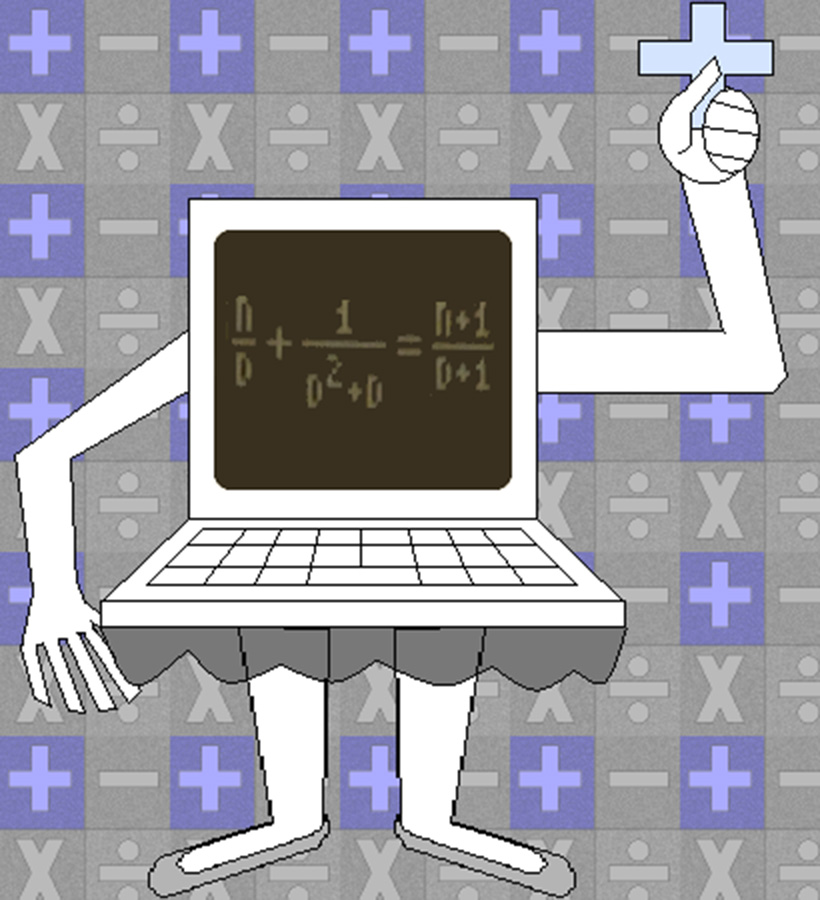
1/2 + 1/(2^2 + 2) = 1/2 + 1/(4 + 2) = 1/2 + 1/6 = 2/3
(1/2 = 3/6 & 4/6 = 2/3)
2/3 + 1/(3^2 + 3) = 2/3 + 1/(9 + 3) = 2/3 + 1/12 = 3/4
(2/3 = 8/12 & 9/12 = 3/4)
3/4 + 1/(4^2 + 4) = 3/4 + 1/(16 + 4) = 3/4 + 1/20 = 4/5
(3/4 = 15/20 & 16/20 = 4/5)
4/5 + 1/(5^2 + 5) = 4/5 + 1/(25 + 5) = 4/5 + 1/30 = 5/6
(4/5 = 24/30 & 25/30 = 5/6)

The caret (^) is the symbol of exponentiation, as you may already know.
All you have to do is add the denominator of your chosen fraction to its square & then raise that sum to the power of -1, which will give you the reciprocal! Add that to your chosen fraction & the fraction in the sum will have the next consecutive integers!

However, d ≠ zero(0) due to division by zero being undefined. (Normally) On the other hand, d can be equal to 1 if you want it to, but n will have to be equal to zero(0), which causes this to happen:
0/1 + 1/(1^2 + 1) = 0/1 + 1/(1 + 1) = 0/1 + 1/2 = 1/2
(0/1 = 0/2 & 1/2 = 1/2, which is obvious because it's the exact same number!)
0 = 0/x = 0/(x + 1) = 0/(x - 1) = etc.
In order for the equations with zero in the white stripe above to be true, x can't be equal to zero or to the additive inverse of the other number within the parentheses. Also, you'll be forced to change the value of x! The reason why division by zero is impossible is because multiplication by zero ALWAYS gives you zero as the product! So, dividing zero(0) by itself could give you any number, making the quotient indeterminate! However, you can use different letters as variables!
0 = 0/x = 0/(y + 1) = 0/(z - 1) = etc.
But you'll have to make sure that each variable is not equal to the additive inverse of the other number within the parentheses!

(-3)/(-2) + 1/((-2)^2 + (-2)) = 3/2 + 1/(4 - 2) = 3/2 + 1/2 = 2
((-3)/(-2) = 3/2 since negative ÷ negative = positive; 3/2 = 1 + 1/2 & 4/2 = 2)
(-5)/(-4) + 1/((-4)^2 + (-4)) = 5/4 + 1/(16 - 4) = 5/4 + 1/12 = 4/3 or 1 + 1/3
((-5)/(-4) = 5/4 since negative ÷ negative = positive; 5/4 = 1 + 1/4 or 15/12 & 16/12 = 4/3 or 1 + 1/3)
Back to Index Page Back to Math Trick Menu
© Derek Cumberbatch